 Silk


 App of the Day
from the creators of
 murmur
 Layered
 Date night
One of you wants more, one of you wants less, and both of you are tired of the same exchange. That is a difference to talk about. It is nobody's fault.
Before you start
Pick a time that is not bedtime and not the minute after a no. Say what the conversation is about in your first sentence, so neither of you is braced for something worse.
1. Describe what you miss
"I miss feeling close to you" opens a conversation. "We never do it any more" opens a defence. Say what you would like more of, in your own words.
2. Leave the scoreboard out
Counting who asked and who said no turns your partner into the problem. If you keep a record, keep it for the pattern: the weeks that went well and what was going on in them.
3. Ask how it is for them
Then listen to the whole answer. The partner who wants less can feel pressure, just as the other can feel rejected. Both can be true at once.
4. Widen what counts
Closeness is more than sex. Ask what makes them feel close: a long talk, a hand on the back, an evening without phones. More of those is often where things shift.
5. Agree one small thing
One thing, for the next two weeks. A night you both keep free. Ten minutes of talk before sleep. Then check back in.
If it stays stuck
Some differences have causes a conversation cannot reach: health, medication, stress, something old. A doctor or a couples counsellor is a reasonable next step, and going is a sign of care.
In Silk
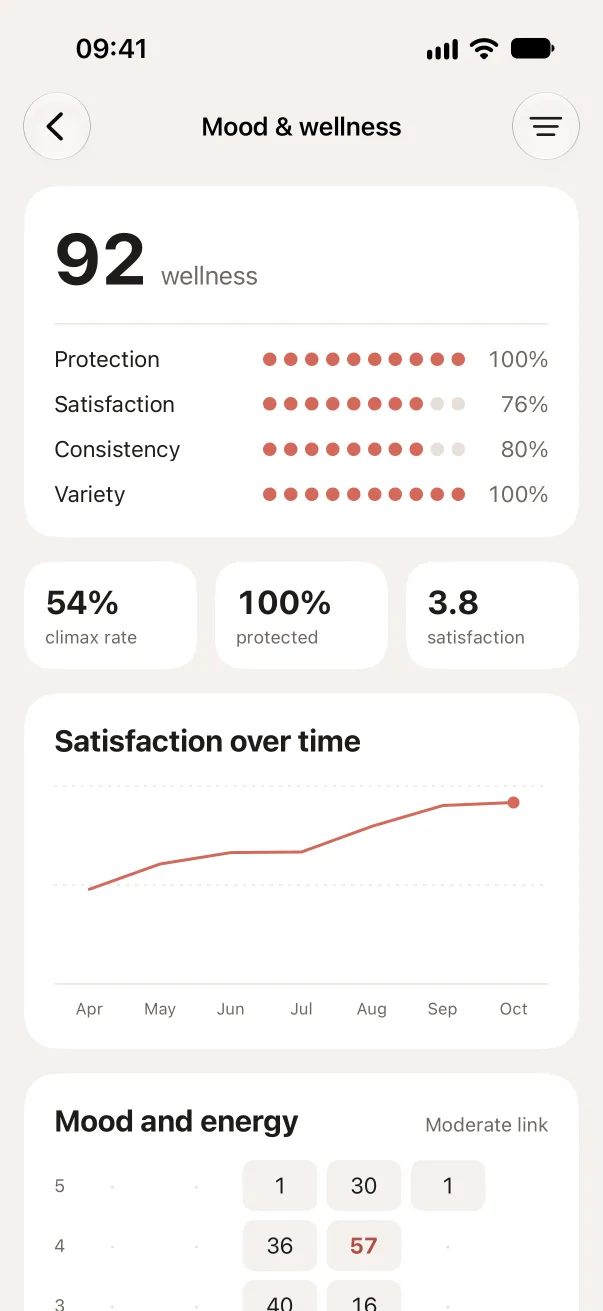
Silk logs closeness as a whole, with mood beside each moment, so you can both see the good weeks and what they had in common. It is a record of what you share.
Updated 11 November 2026.
Questions
How do I talk to my partner about a mismatch in sex drive?
Pick a calm time, say what you miss in terms of closeness, ask how it is for them and agree one small thing to try. Avoid counting who asked or who said no.
Should we keep track of how often we have sex?
A record helps when it is about noticing your rhythm and what affects it. It does harm when it becomes evidence against each other.